





ANCIENT GOLD OF EAST MACEDONIA
Michalis Navelidis, professor of Aristotle University
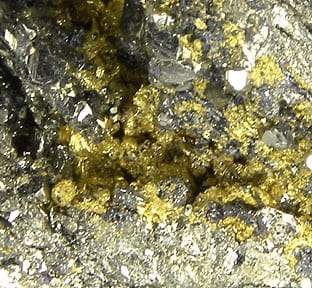
In Nature, gold is mainly native and less in the form of unions.
In the first case there is a natural alloy which can contain significant levels of silver and copper. When the levels of silver are above 25% this is called ilektron and when the content of copper is over 20% this is called copper gold.
In very small quantities, the native gold also contains other minerals such as osmious, iridium, palladium, platinum, routhen, rhodium, as well as antimony, bismuth and mercury.
In Greece, gold is found, according to our investigations so far, mainly native.
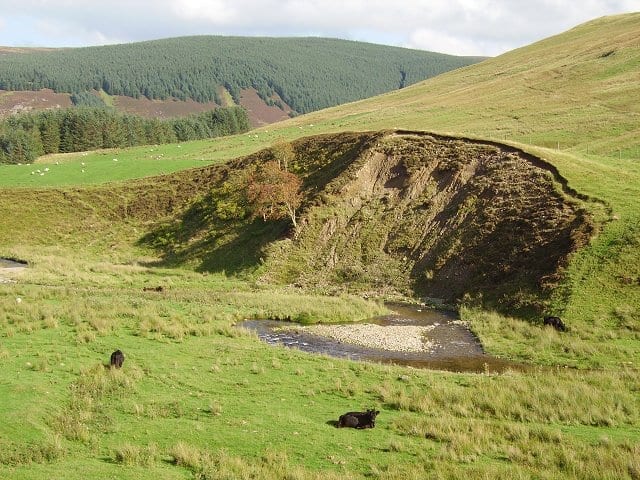
The alluvial deposits have lower levels of silver (less than 10%) due to the fact that gold is transported into the rivers and thus have a natural enrichment of grains of gold and physical removal of the silver. The biggest therefore the transport distance of the grain of gold from the original source, the more pure gold that is. This is a fairly good criterion for determining the source of origin.
Native gold is also answered in iron ore, copper and arsenic in contents of 18% silver.
In some cases gold is found in Greece and in the form of units of bismuth.

The gold deposits in Greece are mainly in Macedonia and Thrace (consisting of gold deposits on borders of Greece: Orestiada, Didimotiho, Alexandroupolis, Traianoupolis, Soufli, Vissa, Feres and further Komotini, Sapes, Xanthi, Iasmos, Stauroupoli, Komnina, Galani, Proskinites, Kavala, Hrysoupoli, Eleutheres, Keramoti, Drama, Kalampaki, Eleutheroupoli, Doxato, Prosotsani). In the rest of Greece, we have individual views on the islands of Evia, Sifnos, Milos, Samos and Lesbos. In eastern Macedonia there is gold in the river of Nestos in the areas of Old Kavala- Philippoi, on the islands Thassos in Paggeon, in the river Agitis in Menikio (Alistrati), in the region of Strymon (Nigrita- Heimaros), Vrondou, Neurokopi and Agistro.
Many ancient authors mention the exploitation of gold in ancient times. Omiros mentions ancient gold mining in the area of north Maronia. Irodotos and Aristotle refer to the explotation of gold in Ehedoros (today’s galikos), ancient Paionia and mines in Disoro. Another well- known area of seniority in accordance with the Stravona is on the Strymonas area. Also we found ancient mining activity near Amphipoli as well as in Nigrita region and Heimaros.
Regarding Pangeo, it is a region which mentioned by many ancient writers: Herodotus, Eurypidis, Thucydides, Xenophon and others. Stravo says: Paggaio itself has mines and the whole area to the valley of the Strymon to the Paionia. I should mention that the ancient places of Nikisiani, Ofrinios, Mousthenis etc that we visited so far do not correspond to that reputation as a great Pangeo. Prominent mining center in ancient Greek literature have the gold mines of Thasos and Skapti Ili. Herodotos and Thucydides reported that the most important factor of wealth and development of Thassos during the ancient times was the income from the mines of the island and opposite in Thrace. At the time period of Herodotus, this income reached 200 talanta per year and in good years 300 (remember that 1 talent equivalent to 26,2 Kg of silver equivalent). 80 of them came from the mines of Skapti Ili.
Indeed on Thassos, which was systematically studied in the contex of my doctoral, there are ancient gold mines in the region of Palaioxori and Klisidi at altitude between 200 and 600 meters and between Ainira and Konira and opposite the island of Samo thraki just as described by Herodotus and below the acropolis of Thassos. In Kinira there is alluvial gold deposit in modern karst of marble, which was operating strong.
Herodotu’s reference that the entire mountain is inverted is true. We have to say also that a similar type of deposit has not been described so far in the literature.
Beneath the acropolis of Thassos, there is a system of tunnels about 300 meters in length reaching below the sea level. The gold –bearing layers are in contact with the lower gneiss and marble. Skapti ili was known in antiquity, as mentioned above, for the quantities of gold from the mines and for their connection to the historian Thucydides.
The question about the exact location of Skapti Ili‘s mines was searched and discussed repeatedly by previous research. Some even argue that they are in Paggeon. Accourding to our systematic investigations we believe that Herodotus was referring to the area north and east of the city of Kavala, where identified a large number of hits and auriferous ore argentiferous.



image
1. Alluvial gold
2. Vertical access method (Skapti Ili)
The dating of mining deposits in sediments is very difficult, often impossible and that’s because the traces in such fields destroyed and lost easily. All that remains are piles of waste leaching. In contrast to the alluvial deposits, the traces of ancient mining activity remained until today in very good condition especially in the underground.
Based on the geometry of the extraction technique and access, as well as the archaeological findings and the use of C14 dating methods and thermophotograph, we see so far in surveyed in the mines of Eastern Macedonia several stages of exploitation. Most interesting is the classical period. The ancient tunnels have been mostly the typical (classical) shape like a table. Also, common is the rectangular section as there was in the mines at Philippoi, Skapti Ili and Thasso’s acropolis. The size of the tunnels are usually 80cm in width and 90cm averaged in height. Similar cuts with these tunnels were observed in pits, whose operation served to promote the ore and for the (atmospheric) conditions of work in areas of mining (ventilation ets.)
For the construction of these tunnels and shafts they used in classical antiquity, mainly two ways to access, which are well known from Lavrio. The vertical and horizontal. A third method of access, which was used for the exploitation of the ore, was the placement of fire when the rock was very hard.
The method of auriferous ore mining was practiced in ancient times mainly in the method of repayment. In contrast to the modern method of operating, the ancients followed when accessing the ore body. By extracting ore, extensive irregular areas were created often, the so- called repayment as well as a labyrinthine system of tunnels. The tools used by the ancient for the mining and access were mainly the cutter and hammer. In some cases we found traces pickaxe. For soft material backhoe was probably used.
When the metal-layer was sloping it was usual to do the operation to more than one level. In senior positions at lower levels or at the entrance sculpted stairways. To support the roof left by the ancient thick walls made up or shoring. The columns were made from the rock that hosts the ore. For the construction of the wall supports are mainly used in the sterile material from the mine. Regarding the light: With torches but mainly with domestic oil lamps of clay or pencil. For tubes dug pits in the wall rock, or constructed items made of clay. An important observation in ancient mining areas is that outside of the gold mines we usually find very little and generally small piles of quarried material, although mining rooms are often enormous.
This is mainly due to the fact that the breakage and separation of extracted material and often enrich the ore was done in mine. The sterile material was used in the construction of walls and supports are to cover and thoroughly to close premises which do not use them anymore. In this way they avoided the difficult task of transporting the sterile material and restore the environment (Religious reasons, to consolidate the wounds of the earth goddess).
The method of alluvial gold extraction was done with the known method of flushing the trough. Followed by casting of heavy fraction if necessary. They often add copper in the molten mix. This fact was found with certainty in two cases:
For the ancient iron ore, ancient Greek followed the same method after crushing and milling the ore, while for multimineral ore there are some evidence e.g that litharge was probably using the cupellation.


